Growth, First Caps, and the Road Ahead
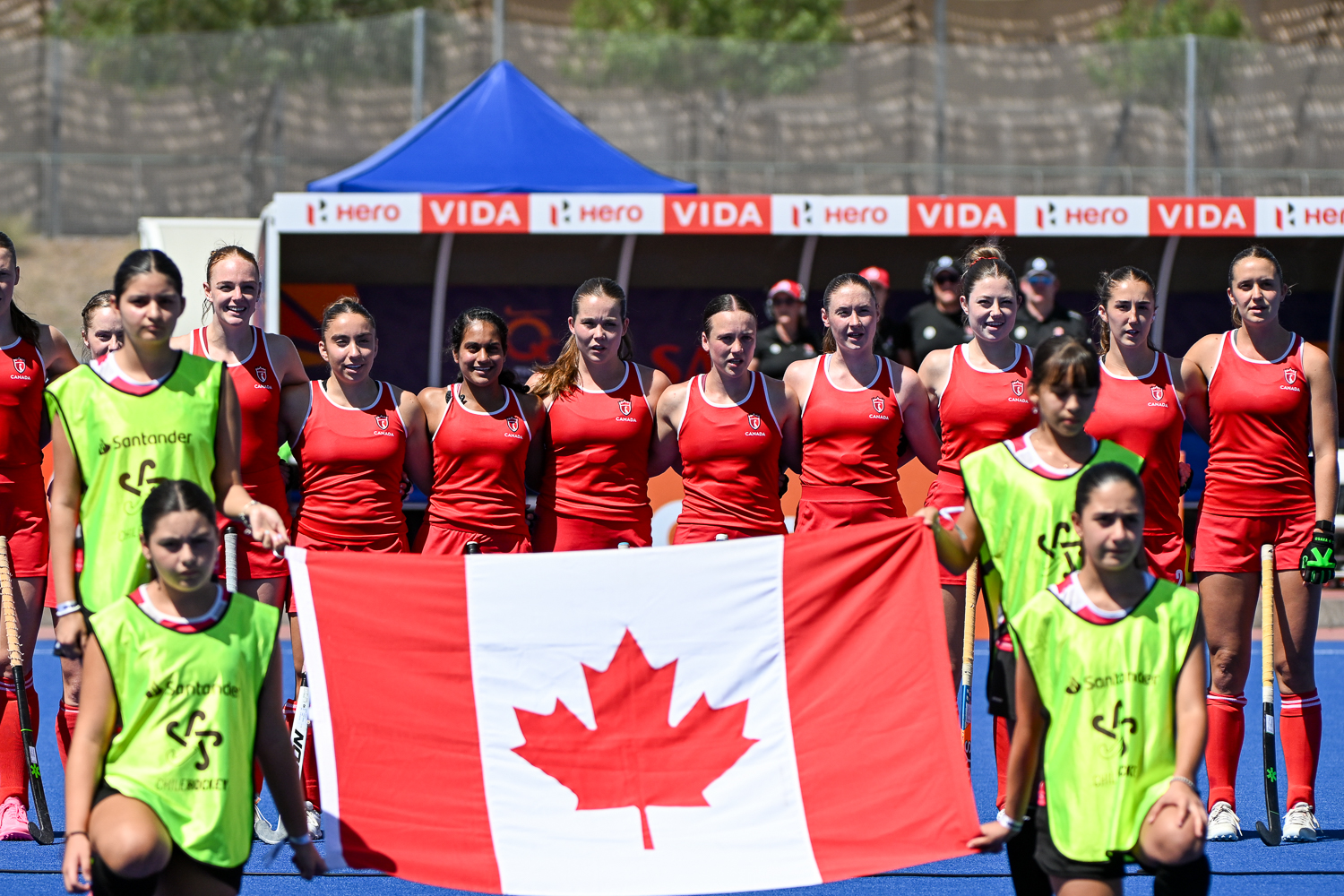
As the Canadian Senior Teams return from the 2026 FIH World Cup Qualifiers in Santiago, Chile, and our Junior teams prepare to head down to the same destination for the 2026 Junior Pan American Championships, it is worth highlighting how these competitions fit into current Field Hockey Canada planning.
Field Hockey Canada’s Strategic Plan 2026-2030 is focused on developing a unified, resilient, and high-performing Canadian field hockey community that is putting teams on the international podium by 2028. This will require strategic transformation and community investment, but the hard work has begun, and we are starting to see a glimpse of the bright future ahead. Even if you glance to this spring, we have had the WCQs, the annual Indoor CanAm Series, NextGen tours are going out, Junior Pan American Championships at the beginning of April and the Indoor Masters World Cup beginning next week. The entire community is connected and participating in exciting international ventures.
Throughout the recent World Cup Qualifiers, our athletes demonstrated grit and resiliency, playing hard-fought matches throughout the five-game tournament. Our rosters were comprised of young athletes, many of whom were earning their first international caps at the senior level. This was an opportunity to gain much needed experience playing at the highest level and our athletes rose to the challenge.
Our national teams enter every international competition with the aim of finishing on top, so the losses can be hard, but it is worth celebrating the smaller milestones. These recent tournament highlights reflect the early steps of athletes who will go on to shape the competitive future of Canadian field hockey and speak to the promise of having more people entering development pathways across Canada.
“Field Hockey Canada has spent the last few years focused on updating and expanding athlete, coach and official pathways, which has resulted in lots of young talent now joining our senior national team programs,” said Susan Ahrens, Field Hockey Canada CEO.
Instead of just looking at the World Cup Qualifiers as a snapshot of results, Field Hockey Canada is looking at them as an important benchmark for where our Senior National Team programs are today and where continued system-wide effort is required. Competing with younger athletes who have only recently graduated from the junior national teams highlighted both the progress being made through updated pathways and the reality that sustained international success is built over multiple cycles.
Our experiences in Santiago validated the direction outlined in the recently released Strategic Plan: investing earlier, broadening access to high-performance environments, and creating a system where athletes, coaches, clubs, provinces, partners, and supporters all play an active role in preparing Canadian teams to compete for podium results. Beginning with the Weise Report in 2020, which flagged that major changes were needed, Field Hockey Canada has been evolving the national team system into a more sustainable de-centralized model, where athletes have centralized camps while also being more integrated into club play. The updated model simultaneously allows our athletes to lead and grow the game in their communities, while also supporting them to play top hockey in the semi-pro league environments offered in other nations.
Field Hockey Cabada is simultaneously committed to building a thriving domestic field hockey environment. “We want to continue to expand opportunities for the next generation of athletes,” said Ahrens, “and that means shifting our focus to aligning club, provincial and national efforts to create efficiencies and development pathways to world-class performances. We want to evolve into a high performing Team of Teams, committed to exceptional governance, growth and the opportunity for participants to excel at all levels.”
Field Hockey Canada is in the middle of transformational change, building out expanded offerings of events and hosting, programming and teams, and opportunities to welcome more people into the community. This is happening in tandem with strengthened donor and sponsor engagement aimed at creating the financial infrastructure to support long-term excellence, including the recently launched Power the Podium Fund.
Competitions like the World Cup Qualifiers in Santiago highlight both the value and cost of international exposure. The reality is that international competition for our senior national teams costs more than $2 million annually, making the broader support of the field hockey community not just appreciated, but essential. Field Hockey Canada is committed to increasing hosting opportunities, improving sustainability, and creating more meaningful ways for Canadians to engage with and uplift our athletes.
Our journey continues, shaped by the lessons from Santiago, strengthened by the emergence of a new generation of talent, and driven by a shared belief in what Canadian hockey can become. The progress we are seeing today reflects deliberate system change, sustained effort, and a community working together toward common goals. As we continue through the next couple of cycles, success will be built not by any one team or tournament, but by aligned action across the country and continued investment and support for initiatives like the Power the Podium Fund that help turn potential into lasting international success.