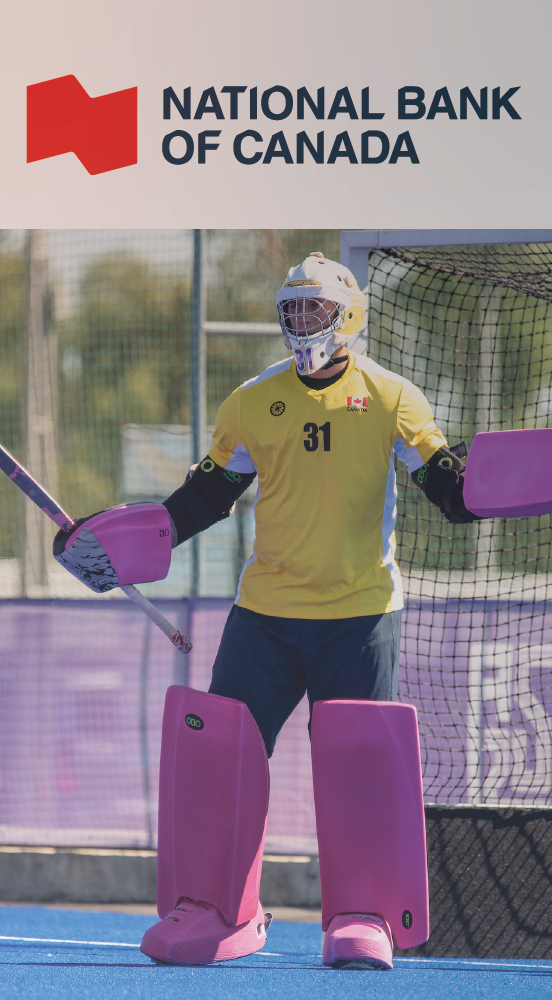
How Field Hockey Canada will deliver positive impact across the hockey community
In my previous article, I outlined the significance of the Government of Canada’s generational investment into sport and why Field Hockey Canada (FHC) is well positioned to respond.
The natural next question is: how will we deliver?
At FHC, the answer is grounded in our 2026 Reset Strategy, a clear, focused framework built around three identified priorities to:
- Govern Effectively
- Grow the Game
- Perform on the World Stage
The 2026 Reset Strategy looks to build on the foundational changes made over the last quadrennial to move FHC from rebuilding to accelerated growth. With improved organizational capacity and aligned programming across the country, we are now positioned to build on our strengths, scale what is working, and deliver improved performance across the system.
That timing matters. The Government of Canada’s five funding pillars (Build, Protect, Play, Perform, and Host) provide a clear framework for where sport investment can have the greatest impact.
For FHC, the alignment is clear. Our priorities are not being reshaped to fit this moment but instead reflect years of transformational change and work already underway. With the 2026 Reset Strategy, FHC is positioned to convert this new investment into meaningful, lasting impact across the entire field hockey .
The following sections show how each funding pillar aligns with work FHC already has underway, and how targeted investment can help accelerate that work into broader system impact.
BUILD – Infrastructure for the Future of Field Hockey
The Build pillar is about infrastructure, creating the physical and system capacity to support participation and performance. At FHC, this is already in motion.
A strong example is the work underway in Ottawa, where a fully aligned system of local club, provincial body, and national federation has unlocked international support from the Fédération Internationale de Hockey (FIH) and the Pan American Hockey Federation (PAHF). The result will be a dedicated national Hockey5s facility within the year, which is a significant step forward for the sport in Canada.
Across the country, we are also focused on:
- Resurfacing legacy facilities, including Pan Am Games infrastructure at the University of Toronto and Moberly Park in Vancouver
- Leveraging new builds, such as the Tam 3 facility in British Columbia, with opportunities to integrate high-performance elements including strength & conditioning and recovery spaces
- Supporting community-led development, ensuring infrastructure is driven by local need and engagement
To accelerate this work, FHC will be establishing a Facilities and Infrastructure Working Group, tasked with mapping national development across all formats of the game — 11-a-side, Hockey5s, indoor, and beach hockey — from coast to coast to coast.
We invite clubs, universities, and provincial partners to join us in this effort. Infrastructure is not built in isolation rather it is built through collaboration.
PROTECT: Strong Governance and Safe Environments
The Protect pillar is foundational. A strong sport system must protect its people and operate with transparency and integrity.
FHC has already made meaningful progress in strengthening accountability and participant protection across the system. This includes:
- Publishing Board minutes and financial statements to support transparency
- Implementing Safe Sport training across the system
- Strengthening the roles of Athlete Council (AC) and Athlete Directors (AD) to ensure athlete perspectives are included in decision-making processes
- Establishing minimum standards for participation and conduct across FHC activities
Our next steps will build on that progress by:
- Modernizing bylaws to strengthen governance frameworks
- Advancing board and leadership succession planning
- Expanding committee structures to support layered, accountable governance
Protecting the system is not a one-time action, it’s an ongoing commitment.
PLAY: Removing Barriers and Expanding Access
The Play pillar speaks directly to participation and the removal of barriers that prevent Canadians from engaging in sport.
FHC’s previous strategic cycle laid the foundation for this work. We are now focused on scaling it. This includes:
- Expanding low-cost, community-based programming
- Addressing barriers related to access, affordability, and capacity
- Continuing to grow events, competitions, and entry points into the sport
Our objective is simple: make field hockey accessible to more Canadians, in more communities, in more ways.
PERFORM: Supporting Athletes to Succeed
Performance remains a central pillar of our mandate.
A key component of this is the Athlete Assistance Program (AAP), which provides direct financial support to athletes. For FHC-nominated athletes, this currently represents approximately $830,000 annually, paid directly to athletes, with FHC responsible for nomination and oversight in accordance with Government of Canada policy.
This funding is critical. In recent years — particularly post-pandemic — athletes have faced increasing financial pressures. The renewed investment in athlete support included in the announced funding provides an opportunity to:
- Increase direct athlete support
- Reduce financial barriers and levies
- Expand competition opportunities
- Strengthen high-performance environments and services
Equally important is the anticipated increase in direct funding to National Sport Organizations, the first significant injection in over 25 years. This will enable FHC to better support national teams with:
- More international competition exposure
- Enhanced coaching and performance services
- Integrated support systems around athletes
HOST: Building a Sustainable Event Platform
Hosting is both an economic and performance driver, and FHC has begun to establish momentum through events and partnerships that strengthen visibility, engage community and create new athlete development opportunities, including:
- JPAC 2024
- The annual CAN-AM series
- Emerging partnerships, such as the Sikh Games
Looking ahead, we will continue to:
- Expand hosting opportunities across all levels of the game
- Leverage new and existing infrastructure
- Use events to drive community engagement, athlete development, and system visibility
Bringing It Together: A System That Delivers
The federal government has described its investment in Canada’s sport system as a nation-building priority and has identified areas for improvement that closely align with our own 2026 Reset Strategy. Built around Govern, Grow, Perform, our strategy is designed to deliver the following outcomes:
- A positive, safe, and healthy environment for all participants
- Long-term financial sustainability for the sport
- Strong, growing, and connected communities across Canada
- A thriving domestic system serving all levels of play
- Podium performances at World Championships and Olympic Games
A Generational Moment
This generational investment in sport offers us a five-year window of opportunity. With the foundational work FHC put in place during the previous strategic cycle, Field Hockey Canada is ready not only to participate, but to lead.
We have:
- Rebuilt our foundation
- Strengthened our governance
- Expanded our pathways
- Invested in communities
- Positioned our athletes for success
Now, with the right alignment of investment and strategy, we will accelerate. This is not about maintaining the status quo; it is about building the future of field hockey in Canada.
Susan Ahrens
Chief Executive Officer